SHARE
The Customer
LiveLink Aerospace is a UK technology company specialising in fully passive air intelligence systems designed for contested, sensitive airspace. LiveLink’s core capability was developed to meet complex air defence, critical infrastructure and environmental requirements where conventional radar solutions introduce operational or regulatory constraints.
LiveLink was selected to work alongside Vattenfall and the Offshore Renewable Energy (ORE) Catapult to support the Department for Energy Security and Net Zero programme.
The project brief was to demonstrate a practical, RF emissions free method for protecting offshore wind assets.
The Challenge
Offshore wind developers face a persistent and well documented challenge: conventional ground‑based radar systems generate digital clutter when interacting with the rotating blades of large offshore turbines. This clutter impacts the performance of air defence radar networks, leading to detection uncertainty, false tracks and degraded situational awareness.
Traditional mitigation typically relies on radar upgrades, software filtering or additional surveillance assets. These solutions are expensive and often place additional burdens on operators.
More importantly, most involve active RF emissions, increasing the likelihood of interference within air defence or civilian surveillance systems. This increases complexity across both operational and planning consent processes, creating cost and uncertainty for developers and stakeholders.
Project Requirements
The project team needed to develop a solution that could operate entirely passively, avoiding RF emissions and eliminating interference risk while still delivering actionable air intelligence over large offshore environments.
Requirements included:
- A passive sensing capability able to classify and track aircraft without generating radar clutter
- Reliable, high quality imagery suitable for long range identification and verification
- A system engineered for 24/7/365 operation in severe offshore conditions
- Low SWaP‑C hardware suitable for autonomous deployment with minimal servicing
- Interoperability with LiveLink’s existing sensor fusion pipeline
Overview’s Involvement
To support the offshore demonstration programme, Overview supplied several PodView2500 Remote and Autonomous Sensor Systems, purpose built for persistent, stabilised operation in demanding maritime environments.
LiveLink integrated PodView into a wider fusion architecture that included acoustic sensing and LiveLink’s proprietary passive air intelligence algorithms.
For the offshore demonstration with Vattenfall and ORE Catapult, this imaging layer provided an essential complement to LiveLink’s fully passive detection approach, ensuring that operators could both detect and visually validate targets in real time.
The Customer Benefits
The offshore demonstration validated PodView as a trusted, operationally critical element of LiveLink’s fully passive air intelligence capability, delivering long range visual verification without RF emissions or added complexity. Embedded within LiveLink’s sensor‑fusion architecture, PodView strengthened decision maker confidence and reinforced a long term collaboration between LiveLink and Overview.
“This programme deepened a valued partnership with LiveLink and sets us up to bring this capability to future offshore deployments and critical national infrastructure — at scale.” – James Kinsman CTO
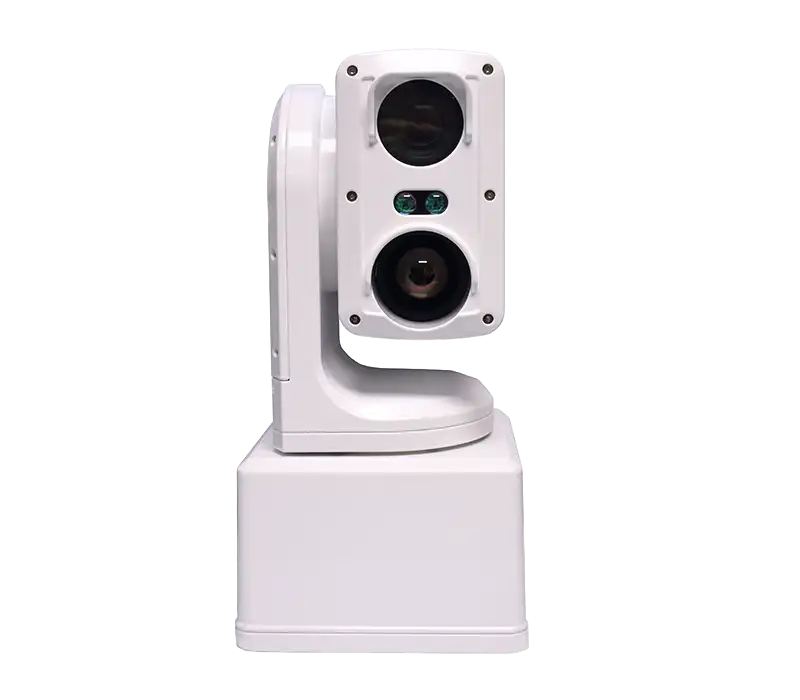
PodView Key Attributes:
- Onboard low latency AI processing
- Remote and autonomous operation
- Ruggedised design for harsh maritime conditions
- Low SWaP‑C
- High quality imaging at distance
- Lowlight and night time performance
- Mechanical stabilisation ensures stable imagery in high winds
 Navigating NDAA 2023 Compliance